Friday, November 6, 2009

Assimilationism


The word is exploited by American Ethnicity theorists to insist over the theory that ethnic groups are the congregations of people from the same ethnicity or religion which maintain their culture by keeping their distance from outsiders.


So, once put in the same place, in this case the American society, geographically, the rational move in order to keep the society from falling apart would be to distribute a common odor among all components of the society including new-comer ethnic groups. This process which is called assimilation is likened to a melting pot by scholars; that is whoever enters this cycle has to melt into the American style and system of thinking, culture, and life.


After doing so, the belief is that all the prejudice and discrimination which used to be held up against ethnic groups, will gradually diminish and eventually fade away as the procedure of melting (assimilation) takes place, for the out coming results, which is one mono-color assembly has the quality of being united.


This figurative melting happens through two actual steps at the same time, the first one to be acculturation, which is equal access to the common culture of the society for ethnic groups as the natives and integrations which is the same amount of inclusion of ethnic group, compared to that of the natives, into society rather than them being remote.

James Town Settlers


James Town with its first European visitors in 1607, a number of whom died on the spot and the rest who became the first settlers shaping the United-States-to-come, plays a significant role and holds a profoundly respected place in American history, for it later on became a model for future colonizers not to fall for the same mistakes, as their predecessors did, in order to maximize the utility of life on the New World.


It is a fortunate luck that western civilization benefits from a notably vital feature which is Habeas Corpus and that is not resulted save by a written-documentary culture. From the very first migrants, John Smith being of them, up to now, this has been what Europeans and later on Americans practiced. And it was only through this specific habit that next generations learned from Smith’s experiences about life on the New World how to live, what to do and what not to do.


Through James Town model colonizers found out the fact that in order to reach ultimate beneficiary goals they had to give everyone a share in the outcome so that individuals would have incentives to work harder for their own sake, at the first level, and the financially sponsoring company; colonizers learned how to build up societies based on law when they had a taste of what it was like to have a council where decision makers would sit and discuss the issues concerning the infant colonies; colonizers learned how and when to think of food if they did not want to share the destiny of the first adventurers over half of whom died due to famine, or of the ones who turn to cannibalism; colonizers learned to be aware of putting shelters over their heads lest would they confront the killing stone-cold winters that killed a lot of first James Town settlers; and they found out how to trade with Indians and how to make use of them, as we later see that colonizers even found ways to employ Indians to serve them on England’s wars against its European rival.

The Huxtables


The Huxtables depicted as an upper middle class black family, is believed to have brought about a major renewal. The miracle of this show is that it helped uplift the then-current public opinion about African Americans.


Before Bill Cosby’s show, mainstream American opinion did not evidently have room for such a concept about an African American crowded family. One can strongly assert that “The Huxtables” is the first different depiction of blacks in the history of the U.S. Bill Cosby, in his debut TV show morphed a new insight on blacks by showing the caregiver of the family as a doctor, mother a lawyer, who are in every sense smarter than their children, quite the opposite situation going on with the other shows of the time, creating sharply contrasting circumstances in terms of what majority used to think about African American family. The creator of this TV show “afforded African Americans the luxury of being black without it being a problem.”


However, Bill Cosby thinks of his work as a follower, not a prominent, concerning black issues, as he pretty much seems to be appreciating Dr. Luther King’s movement, for instance.


It is so much interesting how Bill Cosby, a comedian artist, sees the whole world as a play when he says “I’m a fan of their [Barack and Michelle Obama’s] show”. This way, Bill Cosby argues that it was Obama’s narrative that brought him victory, because he told the Americans what they had been longing to hear. The same analogy could be applied to The Huxtables, justifying their coast to coast fans and of course Emmy Award of the time.

Ethnic Conflict Theory


Ethnic conflict theory points to totally new horizons of thought and thus completely new approaches to the study of American ethnicity. This theory can be put into words through two different schools of thoughts; however, the basis in either of these two is the same and that is competition between ethnic groups.


How this competition emerges is a whole different process which is described by theorists to have shaped through a long time. According to ethnic conflict theory, struggle, competition, and consequently stratification are not recent phenomena. “They occurred between indigenous and immigrant people over land, and they continue today among ethnic groups in the labor market and other routs to the good life.” (Hraba, 1979:93)


One of the two schools through which conflict theory can be employed is Karl Marx’ conflict theory that says along with the social alteration two bipolar cliques are to come into being: one which holds the economic power due to its abundant ways of access to natural resources, and production on the other end. Others are the ones who are being exploited by the formerly mentioned powerful group. This process, according to Marx, which includes class and class struggle will end up in oppression and social consciousness of the oppressed. Because of this consciousness people will fuse into one of these economic classes to shape their ethnic groups.


The other school of thought applicable to our subject surely is Max Weber’s tradition. Weber believes that would be regarded as simple mindedness to reduce an issue as complicated as this to a mere economic explanation. Therefore, he suggests three dimensions to social stratification which are class, power, and status. People from different classes in a complex society enjoy vis-à-vis different social opportunities. Social power, the other dimension, can be reached by political party affiliation, identification, participation, and activity. Status which has strong associations with the concept of honor creates boundaries between honorable ones and those who lack it. That being illustrated, the theorists of this tradition believe ethnic competition, conflict, and stratification are recurring, inevitable facts among all these dimensions.

Refferences:

Hraba J., (1979), American Ethnicity, Itasca: F.E.Paecock Publishers Inc.

Identity and Immigration


The article mainly focuses on the issue of identity in the modern liberalism and how this liberalism suppresses or gives it a blank check to develop itself on the grounds of immigration.


The word freedom which is derived from “liberalism”, as Fukuyama expresses, totally overlapped with the concept of freedom to preach or practice one’s religion and the first settlers were thoroughly fine with that because they were highly homogenous and there had not a dialogue been shaped yet.


The key point in this article is that the identities in the new world are achieved compared to that of the traditional world’s ascribed ones. By looking through this lens a lot of pieces of the jigsaw fall into place. This way, even the terror attacks motivated by radical Islamist theory can be interpreted, Fukuyama contends, as identity demonstration; in the sense that identity is step by step constructed by the society. Now, if anything gets in the way, in this case immigration in which individual changes his/her society or change in individual’ society like transition from traditional society to the modern one, identity crisis would be resulted. Fukuyama thinks that “the problem of jihadist terrorism will not be solved by bringing modernization and democracy to the Middle East,” because “in the Muslim world they are likely to increase … the terror problem in the short run.”


But it is not solely about Muslim immigrants or radical Islamists. American society hosts to a diverse range of radical and religious ethnicities that are, with the same token, unwilling or better say incapable of getting free from their backgrounds. The age of solid war is no more. Samuel Huntington in his book the clash of civilization conveys that the battle between guns is replacing the battle between cultures. So, if there is anything capable of disrupting American unity that would be diverse identities that resists against fusing into the larger mass.


Retrieved: Feb, 2007


www.prospect-magazine.co.uk/article_details.php?id=8239

Ethnic Pluralism


Starting in the 1970’s and enduring through the 80’s, pluralism, apparently was a protest against assimilation theory, trying to bring up a new deal into American ethnicity, which was, is, and will be always a delicate issue for American sociology. Assimilation, formerly likened to a melting pot, was believed to eventually unite different backgrounds and help emerge a single American culture out of diverse ethnic and/or racial groups, who are defined as groups that have kept, to some extent, their territorial remoteness.

Now, according to what mentioned about assimilation theory, pluralists’ opposition appears as: “ethnic boundaries, as DeVos argues, are basically psychological in nature, not territorial.” He then maintains ethnic identity is the “subjective symbolic or emblematic use of any aspect of culture, in order to differentiate themselves from other groups” (DeVos, 1975:16)

The motto for pluralist therefore is highly probable to be: ethnicity is a formation procedure accomplished through a “historical context” and relevantly it is “changing”. (J.Hraba, 1979:67)

So, one might say that ethnicity, or better put, ethnic identity is a dynamic entity which is capable of changing and adapting itself through and with the requirements of the time. In this sense, the model is that American society, instead of a single and solitary melting pot, is comprised of multiple melting pots, each of which absorbing its own ethnic group and changing them into a new form of identity in the course of social change.

References:

1. DeVos G., (1975), Ethnic Identity: Cultural Continuities and Change, Palo Alto: Mayfield Publishing Co.

2. Hraba J., (1979), American Ethnicity, Itasca: F. E. Peacock Publishers Inc.

Tuesday, October 27, 2009


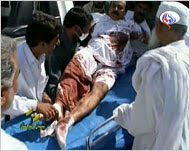
Suicide bomber kills 5 at UN office in Pakistan (AP)


This bombing was the first of the same kind of attacks in Islamabad since June, when two police were killed. Two UN staffers were also killed during another blast in June on a hotel in the city of Pashawar.


Islamist militants in Pakistan, Afghanistan and Iraq seeking to attack high-profile Western targets have shown no hesitation in targeting foreign humanitarian agencies, including the United Nations, regardless of the work they are doing in relieving the suffering in the countries.


U.N. Secretary-General Ban Ki-moon told: "This is a heinous crime committed against those who have been working tirelessly to assist the poor and vulnerable on the front lines of hunger and other human suffering in Pakistan”.


Security camera footage broadcast on local TV shows the bomber walking through a door into what appears to be the main building carrying a two-foot- (half-meter-) long cylindrical object — possibly a detonator — in one hand. Seconds later, a bright flash fills the screen.


It was unclear how he made that far. Typically, visitors to U.N. buildings in Islamabad are screened and patted down for weapons and explosives in secure chambers some distance from the entrance to the building.


U.S. Ambassador Anne Patterson condemned the targeting of aid workers as an attack against Pakistani society. "Such cruel acts expose the true nature of the terrorists' agenda," she said.


These actions will certainly provoke particular countermeasures by the UN officials. But the most important concern, apparently, will be the worries about the UN getting cold feet with help it has been providing to the poor in the region.


Considering the screening process at the UN arrival, the whole bombing may appeal to one as conducted with a cooperating partner within the UN staff.


There were two similar bombing attacks on Islamic Revolutionary Guards corps in Iran in which five guard commanders were killed among dozens of others. This took place in the restive region of the nation’s southeastern frontier with Pakistan.


Jundallah, whose members are Sunni Muslims, has claimed responsibility for other attacks in the region in recent years, and is believed to have killed hundreds of Iranian soldiers and civilians.


In this case again the corps was being guarded by Special Forces who have emerged as the most powerful political, social and economic bloc in the nation. Even during the aftermath of Iran’s contested presidential election, the Guards took control of national security.


The same skepticism strongly arises on how such specialized forces could be reckless enough not to notice a peril so as big as this coming. So, one may naturally think of an ally inside the guarding letting the outsiders in.